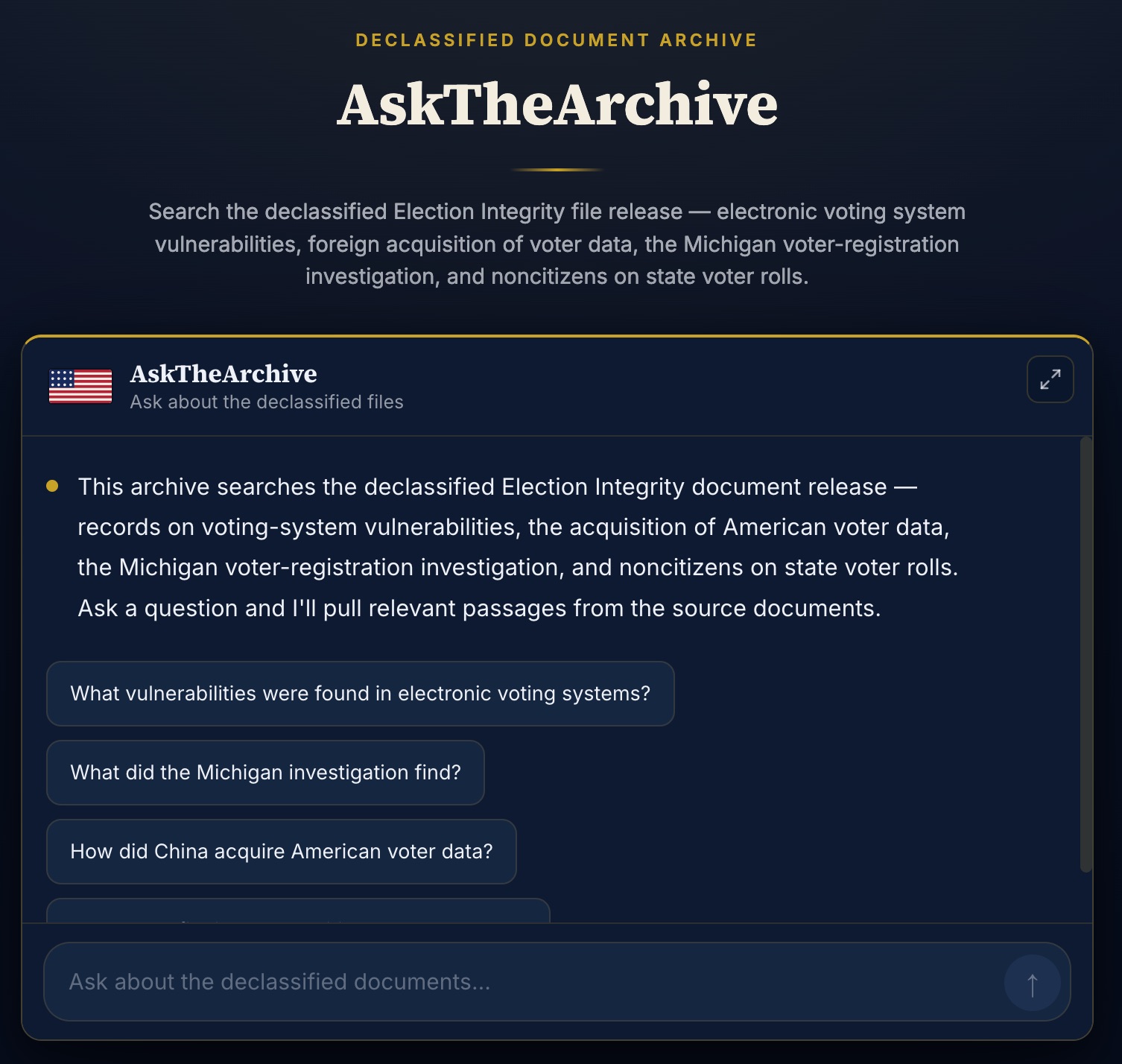
The problem
A big batch of documents lands and the useful parts are buried in it. Somewhere in those thousands of pages is the finding you need, but getting to it means reading, or guessing the right keywords and hoping. That is true of any large record set: discovery documents, regulatory filings, research archives, years of meeting notes. The information is in there. The cost is the hours it takes to dig it out.
What it does
You ask a question the way you would ask a colleague, and it answers from the documents themselves. It stays with what the records actually say, attributes findings to the source in plain terms, and tells you when the documents do not cover something instead of guessing. No keyword syntax, no need to know which file to open first.
How it works
- Connect the source. Every document in the release, loaded once and held together as a single searchable body of text.
- Build the knowledgebase. The text is broken up and organized so every answer can be traced back to the passage it came from.
- Ask in plain English. Type a question, get a grounded answer, and follow up as if you were talking to someone who had read all of it.
Key features
- Grounded answers. Every response is drawn from the source documents, with nothing invented to fill a gap.
- Honest gaps. When the records are silent or redacted, it says so, rather than guessing to sound complete.
- A neutral voice. It reports what the documents state and leaves the editorializing out, which matters for sensitive material.
- Plain-language questions. No search operators or file names to learn, ask the way you would ask a person.
- Self-contained. Runs as its own standalone page, with nothing for the reader to install or set up.
Who this is for
Legal teams working through discovery. Journalists and researchers with a document dump and a deadline. Compliance and policy staff who need to know what a filing actually says. Anyone handed a large body of records and expected to answer questions from it quickly, without reading every page first.